


03-19-2024, 08:27 PM
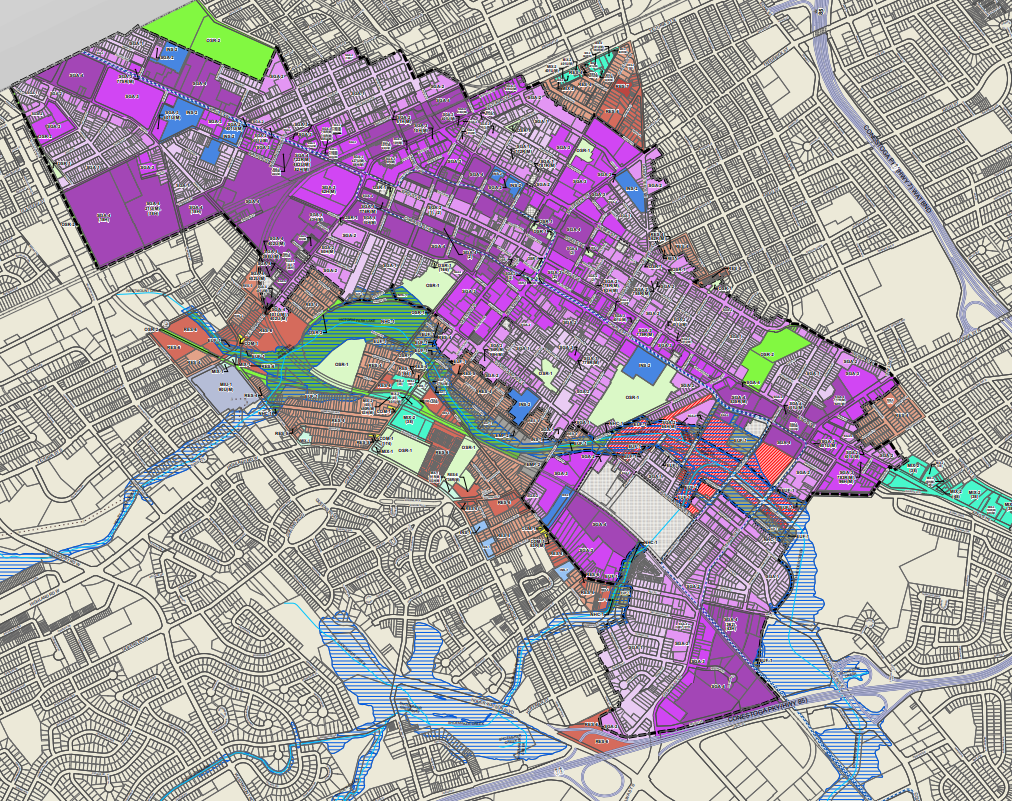
All right, so this is approved now, and by a unanimous council vote yet, in spite of various objections from both sides. One hopes that the Waterloo and Cambridge councils will find the courage to do the same. Here are the zones:
This is what the map looks like (SGA-1 is the lightest pink/purple, SGA-4 the darkest).
Inclusionary zoning applies to developments with 50+ units from 2025; 2% of units must be affordable in 2025 (is this based on the building permit date?), ramping up to 5% in 2031. Maximum rental rates based on current market would range from $1075 (presumably 1BR) to $1631 (3BR?). Not clear on how those are calculated, but they look to be slightly more than 50% of what new purpose-built rentals in downtown cost today (66 Civic is $2000/mo for 1BR, The Scott is $1800/mo).
If we assume a 100-unit all-1BR building (for calculation convenience), that would normally have a rental income of $200K/mo at market rates. At the 2025 rules, two of those units would rent for $1000/mo instead, dropping the landlord's rental income to $198K, or a 1% drop. Alternatively the landlord could charge $2020 for all the market rate units in order to maintain the same rental income.
In 2031, five of those units would rent for $1000/mo instead (using today's figures), dropping the landlord's rental income to $195K, or a 2.5% drop. Alternatively the landlord could charge $2052 for all the market rate units in order to maintain the same rental income. Especially given the gradual introduction, I really feel that these are not excessive impacts, either on landlords or market-rate tenants. (I don't know how this will work for condo buildings, maybe someone can enlighten me on that?)
Additionally, these zones are far less restrictive, allowing developers to build higher and denser (no FSR maximums) and without parking minima in order to regain the same or higher level of profitability.
The council is going to review the progress in two years in order to determine whether adjustments are needed, and the city agreed to a development industry request to continually monitor market conditions as well.
(11-07-2023, 02:39 PM)ZEBuilder Wrote: SGA-1: Max height of 11 meters, everything that is currently permitted in RES-5 is permitted in this as well. For multi residential dwellings of more than 11 units or non residential buildings the minimum FSR is 0.6.
SGA-2: Max height of 8 floors, the 7th and 8th floors must be set back 3 meters from the bottom 6 floors. When it abuts a SGA-1 or RES 1-5 zone it has a max height of 12.5 meters
SGA-3: Max height of 25 (now 28) floors, minimum FSR of 2.0, minimum podium height of 3 floors, max of 6, minimum ground floor height of 4.5 meters, max height of 12.5 meters next to SGA-1 and RES 1-5. (...)
SGA-4: Unlimited height, minimum FSR of 2.0, minimum podium height of 3 floors, max of 6, minimum ground floor height of 4.5 meters, max height of 12.5 meters next to a SGA-1 and RES 1-5 zone. (...)
This is what the map looks like (SGA-1 is the lightest pink/purple, SGA-4 the darkest).
Inclusionary zoning applies to developments with 50+ units from 2025; 2% of units must be affordable in 2025 (is this based on the building permit date?), ramping up to 5% in 2031. Maximum rental rates based on current market would range from $1075 (presumably 1BR) to $1631 (3BR?). Not clear on how those are calculated, but they look to be slightly more than 50% of what new purpose-built rentals in downtown cost today (66 Civic is $2000/mo for 1BR, The Scott is $1800/mo).
If we assume a 100-unit all-1BR building (for calculation convenience), that would normally have a rental income of $200K/mo at market rates. At the 2025 rules, two of those units would rent for $1000/mo instead, dropping the landlord's rental income to $198K, or a 1% drop. Alternatively the landlord could charge $2020 for all the market rate units in order to maintain the same rental income.
In 2031, five of those units would rent for $1000/mo instead (using today's figures), dropping the landlord's rental income to $195K, or a 2.5% drop. Alternatively the landlord could charge $2052 for all the market rate units in order to maintain the same rental income. Especially given the gradual introduction, I really feel that these are not excessive impacts, either on landlords or market-rate tenants. (I don't know how this will work for condo buildings, maybe someone can enlighten me on that?)
Additionally, these zones are far less restrictive, allowing developers to build higher and denser (no FSR maximums) and without parking minima in order to regain the same or higher level of profitability.
The council is going to review the progress in two years in order to determine whether adjustments are needed, and the city agreed to a development industry request to continually monitor market conditions as well.